Starting Korean or heading off to Korea? With just a few words you can say hello, thank people and get out of a tricky spot. Here are 40 basic Korean words and phrases, with their approximate pronunciation and when to use them.
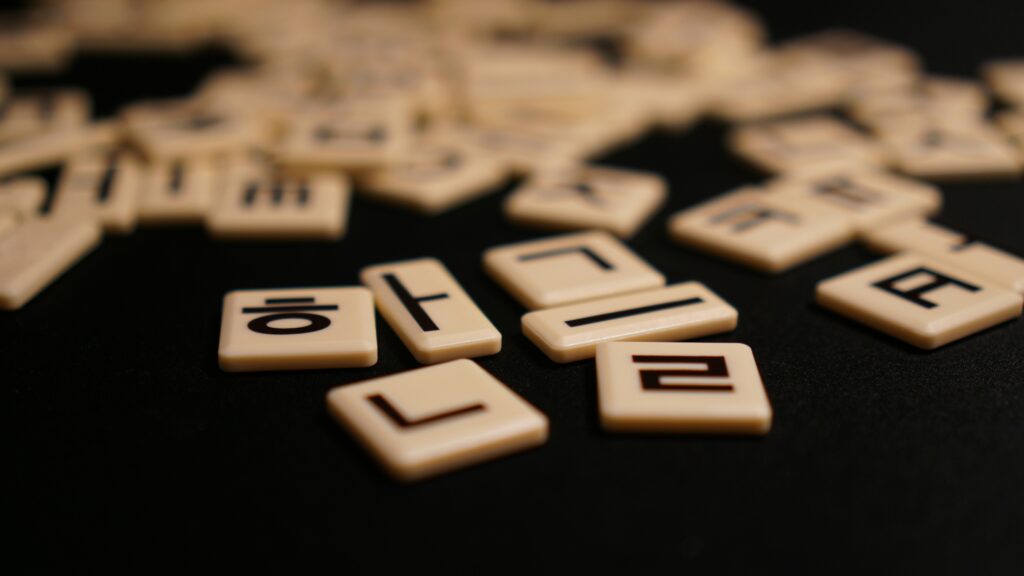
A tip before you start: the pronunciation in brackets is a helping hand, but ideally you read straight from Hangul. It only takes a week with our guide to the Korean alphabet.
Greetings and politeness
Politeness levels matter a lot in Korean. With strangers, in shops or with older people always use the polite forms; keep the casual ones for close friends.
| Korean | Pronunciation | Meaning |
|---|---|---|
| 안녕하세요 | annyeonghaseyo | hello (polite) |
| 안녕 | annyeong | hi / bye (with friends) |
| 감사합니다 | gamsahamnida | thank you (formal) |
| 고마워 | gomawo | thanks (casual) |
| 죄송합니다 | joesonghamnida | I’m sorry (formal) |
| 미안해 | mianhae | sorry (casual) |
| 안녕히 가세요 | annyeonghi gaseyo | goodbye (to someone leaving) |
| 안녕히 계세요 | annyeonghi gyeseyo | goodbye (to someone staying) |
| 만나서 반갑습니다 | mannaseo bangapseumnida | nice to meet you |
Handy everyday phrases
| Korean | Pronunciation | Meaning |
|---|---|---|
| 네 | ne | yes |
| 아니요 | aniyo | no |
| 괜찮아요 | gwaenchanayo | it’s okay, no problem |
| 잠깐만요 | jamkkanmanyo | just a moment |
| 몰라요 | mollayo | I don’t know |
| 알겠어요 | algesseoyo | got it |
| 얼마예요? | eolmayeyo? | how much is it? |
| 화장실 어디예요? | hwajangsil eodiyeyo? | where’s the toilet? |
| 맛있어요 | masisseoyo | it’s delicious |
| 저는 … 입니다 | jeoneun … imnida | I am … (to introduce yourself) |
| 물 | mul | water |
| 친구 | chingu | friend |
| 사랑해 | saranghae | I love you |
Words you’ll hear in K-dramas and K-pop
If you watch Korean shows, these will sound familiar. Notice that the word for “older brother” or “older sister” changes depending on whether a boy or a girl is speaking. More ideas in learn Korean with K-pop and K-dramas.
| Korean | Pronunciation | Meaning |
|---|---|---|
| 오빠 | oppa | older brother (said by a girl) |
| 언니 | eonni | older sister (said by a girl) |
| 형 | hyeong | older brother (said by a boy) |
| 누나 | nuna | older sister (said by a boy) |
| 대박 | daebak | amazing! |
| 진짜? | jinjja? | really? |
| 화이팅 | hwaiting | go for it! |
| 아이고 | aigo | oh dear! (surprise or tiredness) |
| 막내 | maknae | the youngest in the group |
Numbers: two systems
Korean has two sets of numbers. Native Korean numbers are used for counting things and for age; Sino-Korean numbers for dates, prices, phone numbers and minutes.
| Number | Native Korean | Sino-Korean |
|---|---|---|
| 1 | 하나 (hana) | 일 (il) |
| 2 | 둘 (dul) | 이 (i) |
| 3 | 셋 (set) | 삼 (sam) |
| 4 | 넷 (net) | 사 (sa) |
| 5 | 다섯 (daseot) | 오 (o) |
What’s next?
Learning single words is a good start, but to hold a conversation you need grammar and lots of speaking practice. In our Korean classes in Mislata we start with the alphabet and get you speaking from day one. And if you’d like a goal, see how the official TOPIK exam works.
Frequently asked questions
How do you say “hello” in Korean?
The most common form is 안녕하세요 (annyeonghaseyo). With friends you simply say 안녕 (annyeong).
How do you say “thank you” in Korean?
감사합니다 (gamsahamnida) is the most polite form. 고마워요 (gomawoyo) is a bit warmer, and 고마워 (gomawo) is for friends.
What does “oppa” mean?
Literally “older brother”, but girls also use it for slightly older guys they are close to, such as friends or a boyfriend.
Want to try before you decide? Come and visit the academy: your first trial class is free and with no commitment.