If you want to learn Korean, the first step is the alphabet: Hangul (한글). The good news is that it is nothing like learning thousands of Chinese characters. Hangul has 24 basic letters, it is very logical and you can read it comfortably within a few days. In this guide we explain how it works and give you a one-week plan to learn it from scratch.

An alphabet designed to be easy
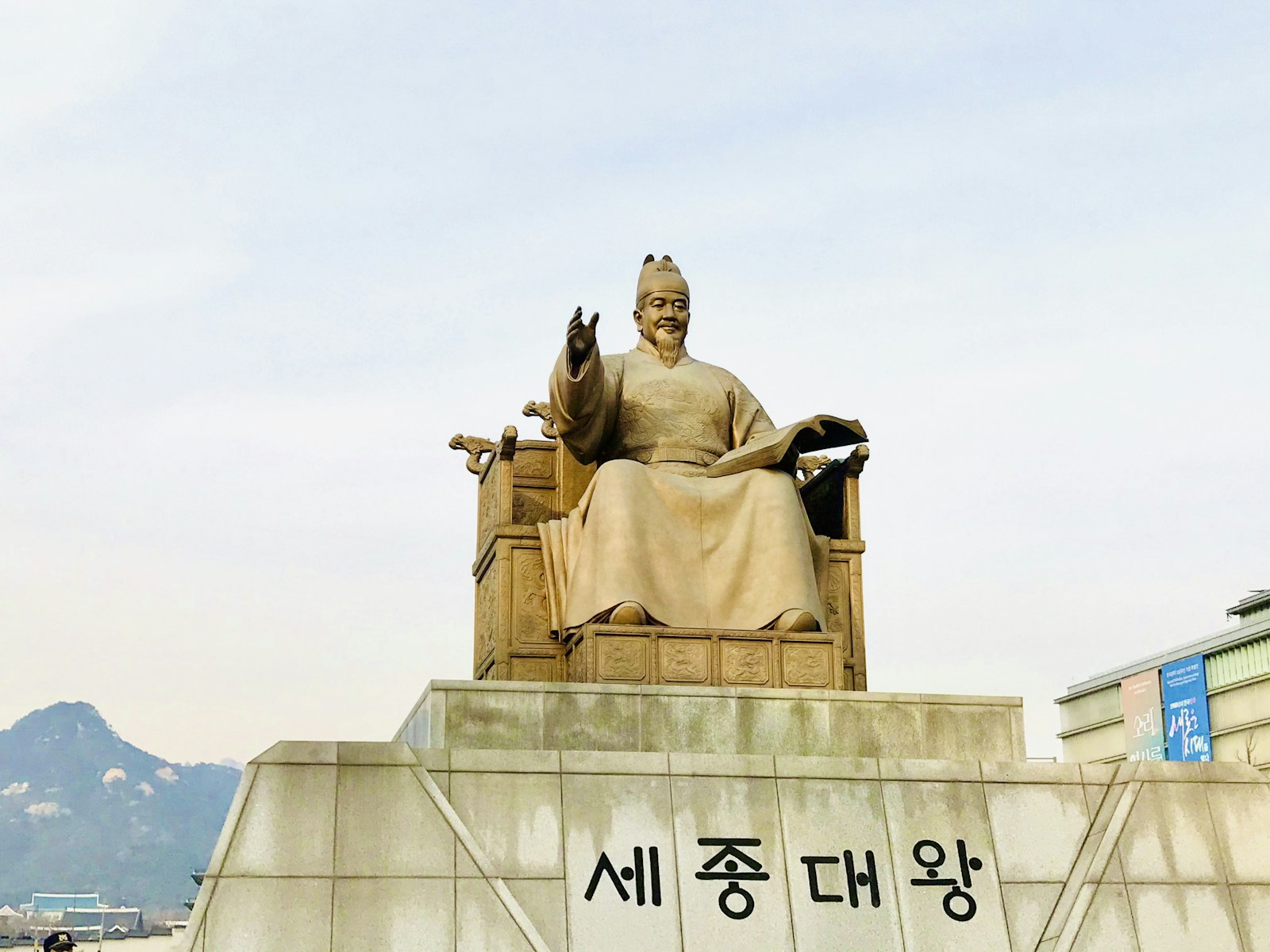
Hangul was created by King Sejong the Great and published in 1446. Until then, Korean was written with Chinese characters, which only a small elite could master. Sejong wanted a system anyone could learn, and the text that introduced it said that a wise person could learn it in a morning, and anyone within ten days. Today South Korea celebrates Hangul Day (한글날) every 9 October.
How Hangul works
- 14 consonants and 10 basic vowels. With double consonants and compound vowels you get 40 symbols, but they are all built from the basic ones.
- Consonants draw the mouth. ㄴ (n) shows the tongue touching the roof of the mouth, ㅁ (m) the shape of closed lips and ㅅ (s) a tooth.
- Vowels are based on three strokes: a dot (heaven), a horizontal line (earth) and a vertical line (humans).
- It is written in syllable blocks. Letters are grouped into squares: 한 = ㅎ + ㅏ + ㄴ, and 글 = ㄱ + ㅡ + ㄹ.
- ㅇ is special: at the start of a syllable it is silent (아 is read a), and at the end it sounds like the ng in sing (강, gang).
The first letters to learn
| Letter | Approximate sound | Example |
|---|---|---|
| ㅏ | a (as in father) | 아 (a) |
| ㅓ | open o (eo) | 어 (eo) |
| ㅗ | o | 오 (o) |
| ㅜ | u (as in moon) | 우 (u) |
| ㅡ | u without rounded lips (eu) | 으 (eu) |
| ㅣ | ee | 이 (i) |
| ㄱ | between g and k | 가 (ga) |
| ㄴ | n | 나 (na) |
| ㄹ | between r and l | 라 (ra) |
| ㅁ | m | 마 (ma) |
| ㅅ | s | 사 (sa) |
| ㅎ | h | 하 (ha) |
With just these letters you can already read words like 사랑 (sarang, love), 나라 (nara, country) or 하나 (hana, one).
A one-week plan to learn Hangul
- Day 1: the 10 basic vowels (ㅏ ㅑ ㅓ ㅕ ㅗ ㅛ ㅜ ㅠ ㅡ ㅣ).
- Day 2: the basic consonants ㄱ ㄴ ㄷ ㄹ ㅁ ㅂ ㅅ ㅇ ㅈ.
- Day 3: the aspirated consonants ㅊ ㅋ ㅌ ㅍ ㅎ and your first syllable blocks.
- Day 4: final consonants, called batchim (받침): 밥, 물, 사람.
- Day 5: double consonants (ㄲ ㄸ ㅃ ㅆ ㅉ) and compound vowels (ㅐ ㅔ ㅘ ㅝ ㅢ).
- Day 6: read real words: signs, menus, song titles. Try 서울 (Seoul), 커피 (coffee) or 김치 (kimchi).
- Day 7: review and a challenge: write your name in Hangul.
Write each letter by hand while saying it out loud: you will remember it much faster.

Common beginner mistakes
- Relying on romanisation. Reading eo or eu in Latin letters is confusing. The sooner you read directly in Hangul, the better your pronunciation.
- Mixing up ㅓ and ㅗ. Both sound like an o, but ㅓ is more open. Listen to recordings until you hear the difference.
- Skipping batchim. Final consonants sometimes change the sound of the next syllable, so practise them early.
What comes after the alphabet?
Once you can read Hangul, the fun part begins: vocabulary, everyday expressions like 안녕하세요 (annyeonghaseyo, hello) or 감사합니다 (gamsahamnida, thank you), and basic grammar. Wondering what lies ahead? Read Is Korean hard to learn?. And if you want an official certificate later on, the reference exam is the TOPIK.
Korean lessons in Mislata
At our Korean school in Valencia we offer in-person lessons for all levels, from beginners to advanced, for teenagers and adults. We start with a free level test and we also prepare students for the TOPIK exam. It is the fastest way to go from the alphabet to your first conversations.
Frequently asked questions
How long does it take to learn the Korean alphabet?
With one or two hours a day, most people can read Hangul within a week. Reading fluently without thinking about each letter takes a few more weeks of practice.
Does Korean use Chinese characters?
Today Korean is almost always written in Hangul. Chinese characters (hanja) appear only occasionally, for example in some academic texts or newspapers.
Can I learn Hangul on my own?
Yes, the alphabet is easy to learn independently. For pronunciation and conversation, though, it really helps to have a teacher who corrects you from the start.
Want to try before you decide? Come and see the school: your first trial class is free and without obligation.