If you live in Valencia, or you’ve just arrived, you’ll soon notice one thing: there’s always something to celebrate here. Firecrackers, flowers, bonfires on the beach, parades… Valencian festivals are loud, joyful and very social.
And best of all, they’re the perfect excuse to practise your Spanish. At a festival people talk, laugh and share, and you can be part of it. In this guide we walk you through the most important festivals in Valencia and give you the vocabulary you need to enjoy them.
Festivals in Valencia, month by month
January: Three Kings and San Vicente Mártir
On the evening of 5 January, the Three Kings parade (Cabalgata de Reyes) winds through the city centre, throwing sweets to the children. The next day it’s time for roscón de Reyes, a ring-shaped cake. On 22 January Valencia celebrates its patron saint, San Vicente Mártir, with a local holiday.
March: Fallas
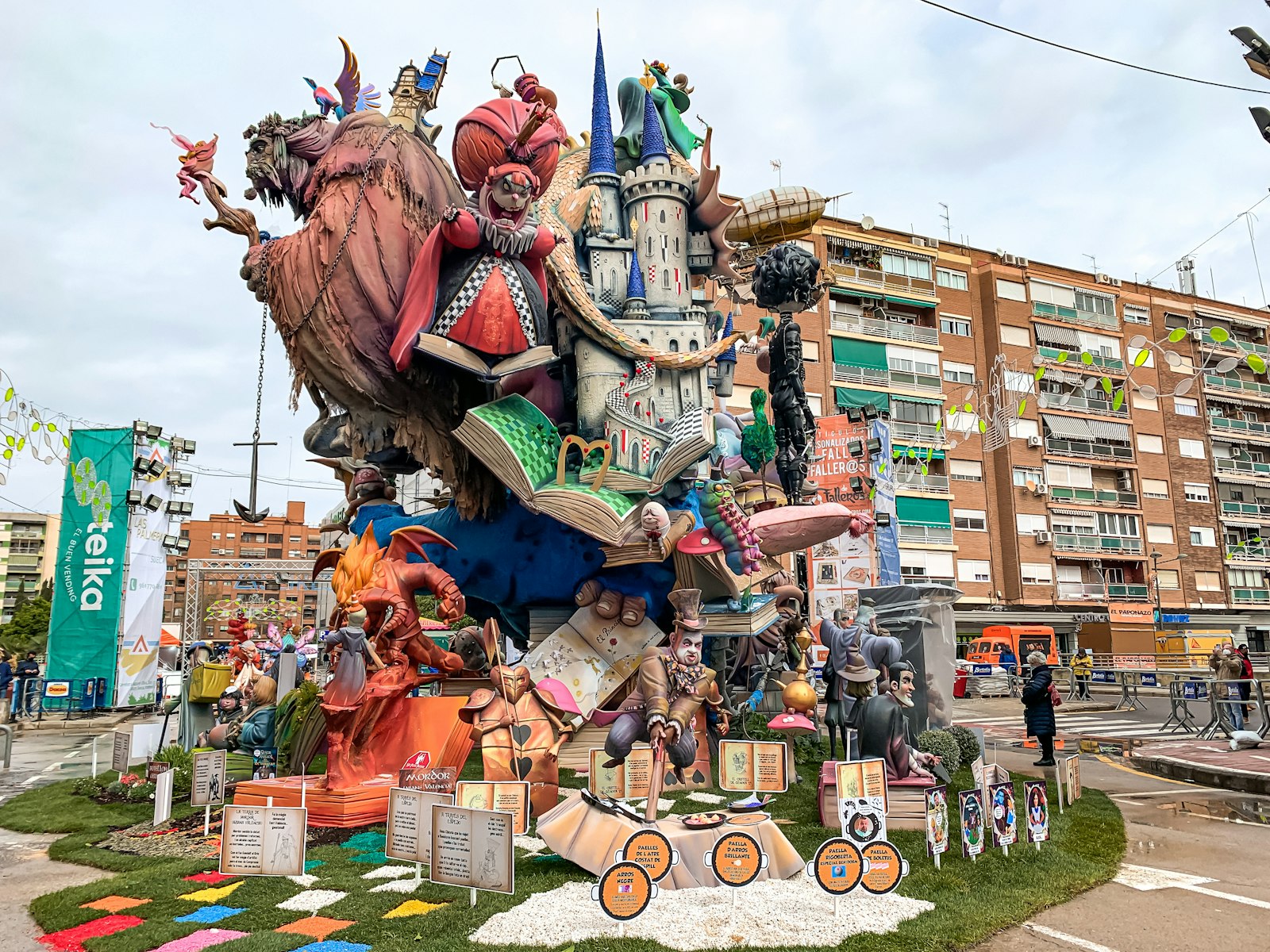
Valencia’s most famous festival, recognised by UNESCO as Intangible Cultural Heritage in 2016. From 15 to 19 March the city fills up with huge monuments made of cardboard and wood: the fallas. Every day at 2 pm there’s a mascletà in Plaza del Ayuntamiento: pure noise and gunpowder. On the night of the 19th, the cremà, all the fallas are burned.
April: Semana Santa Marinera and San Vicente Ferrer
In the seaside neighbourhoods of Cabanyal and El Grau, Holy Week is celebrated by the sea, with processions and a colourful parade on Easter Sunday. A week after Easter comes San Vicente Ferrer, with little children’s plays, the milacres, performed on altars all over the city.
May: the Virgen de los Desamparados
On the second Sunday of May, Valencia celebrates its patron saint. The most moving moment is the Traslado: thousands of people accompany the statue of the Virgin across the Plaza de la Virgen.
June: the Night of San Juan
On the night of 23 June, everyone heads to Malvarrosa beach. There are bonfires, music and a lovely tradition: jumping over seven waves at midnight and making three wishes.
July: the Battle of Flowers
The Gran Feria de Julio ends with the Batalla de Flores on the Alameda. Floats covered in flowers parade past, and spectators and participants throw carnations at each other. Colourful and great fun.
August: La Tomatina
It’s not in the city itself but in Buñol, about 40 kilometres away. On the last Wednesday of August, thousands of people throw tomatoes at each other for an hour. Wear old clothes.
October: 9 d’Octubre
The Day of the Valencian Community marks King Jaume I’s entry into Valencia in 1238. Besides the parade, there’s a very sweet tradition: the mocadorà. Couples give each other a silk handkerchief filled with little marzipan fruits and vegetables.
December: Christmas and New Year’s Eve
Lights, markets and turrón all over the city. On New Year’s Eve, as everywhere in Spain, people eat twelve grapes on the twelve chimes of midnight, one for each month of the new year.
Spanish vocabulary for the festivals
- la falla: cardboard and wood monument burned during Fallas
- la mascletà: daytime firecracker show
- la cremà: the burning of the fallas
- el petardo: firecracker
- la hoguera: bonfire
- el desfile: parade
- la carroza: decorated float in a parade
- el festivo: public holiday, a day without work or classes
- pedir un deseo: to make a wish
Useful phrase: ¿A qué hora empieza la mascletà? (What time does the mascletà start?)
Enjoy the festivals in Spanish with Koyot Academy
Festivals are much more fun when you understand what’s going on around you and can chat with people. At Koyot Academy in Mislata, we help you get there. We teach Spanish, English, French, German and Korean in small groups, in a friendly atmosphere. Want to get started? Get in touch and we’ll tell you which course suits you.
Want to try it before you decide? Come and visit the school: your first trial lesson is free, with no strings attached.